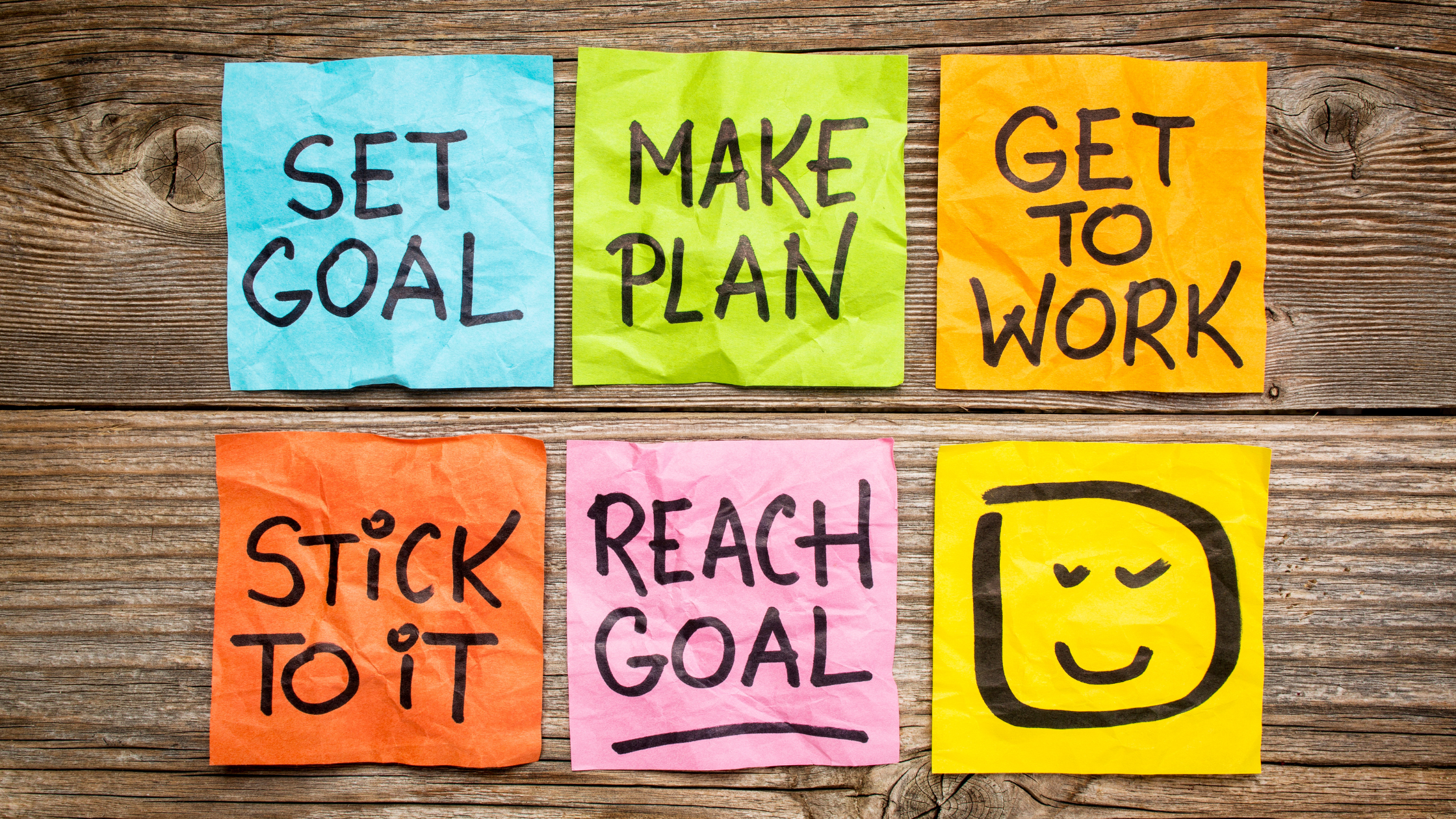

Ever feel like you’re just floating?
Going through the motions.
Going with the flow — but not actually going anywhere?
That’s what it feels like for me when I don’t have a clear goal or alignment with my purpose. I’m doing things for the sake of getting them done, ticking boxes, staying busy — but the outcome isn’t rewarding or meaningful. Nothing feels like it’s building toward anything. I exist in a kind of personal limbo.
And I don’t function well there.
I need a goal. A plan. A purpose. An objective. A dream. A target. Whatever you want to call it — I want to know what it’s all for.
Why this kills creativity
When I don’t know where I’m going, I disengage from my own life. I make smaller choices. Safer ones. I don’t fully participate because I’m not invested in the outcome. Creativity dries up because curiosity has nowhere to go.
Without a goal, the internal dialogue shifts from “I wonder what would happen if…” to “Why bother?”
And why bother is a creativity killer.
The complicated relationship I have with goals
Here’s the irony: I’m also deeply spontaneous and thrive in the chaos of right now.
This is the push-pull of being AuDHD for me. One part of my brain needs structure, clarity, and a clear path forward. The other part is basically Dory — resetting every few minutes, distracted by the next interesting thing, happily veering off on side quests.
Some days it’s very fun being me.
Other days… less so.
What I’ve learned is that I don’t need rigid rules or tightly controlled plans. I need a bigger picture. Something that anchors me.
When I have that, the structured side of me feels safe — grounded in knowing there’s direction — and the distracted, curious side gets freedom. It can wander, explore, experiment, and inevitably… come back.
Why traditional “career goals” never worked for me
I didn’t grow up with a clear career goal. It changed every time I discovered something new I liked. I’d hyperfixate, dive deep, learn everything I could — and then, sometimes just as quickly, move on.
Some interests stayed. Harry Potter, for example, has been a constant for years. Others were fleeting. Paint-by-number comes to mind. I’ll start a painting with intense enthusiasm, work on it for a day, and then lose all interest. If I want it finished for my wall, one of my daughters will complete it — because I won’t.
And that’s fine.
For some people, goals are crystal clear from childhood. “I want to be a vet.” And nothing changes. For people like me — and many others — we try different jobs, different paths, different identities until we find what we’re good at and what doesn’t make our soul feel like it’s being slowly vacuumed out of our body.
So when I talk about goals, I don’t mean job titles or ladders to climb.
What goals actually mean to me
For me, goals are about purpose.
They’re about what fills my cup.
They’re about how I want to live.
A few years ago, I did a goal-setting exercise for the first time in my life — and I didn’t even go looking for it. It showed up everywhere. In a leadership session. In a writing course. Possibly in therapy. The universe was clearly nudging me and saying, pay attention.
It’s a simple exercise — nothing flashy, nothing proprietary — but it changed everything.
The exercise
You imagine your life at a certain point in the future.
It could be six months, a year, five years — whatever feels right.
Then you visualise it in detail:
- Where do you live?
- How do you feel?
- What makes you happy?
- What does your day-to-day life look like?
You write it down.
Things like:
- I am debt-free.
- I eat well and feel strong.
- I have healthy relationships.
- I sleep properly.
Then you write the actions needed to live that life:
- Pay off credit cards.
- Heal my relationship with food.
- Do the internal work to show up better in relationships — and let go of those that aren’t healthy.
- Stick to a bedtime.
- Train at least three times a week.
That’s it.
Your version might be wildly different. Yours might be specific, material, career-focused, creative, relational — anything. There are no rules. The goal is clarity, not conformity.
The part that surprised me most
I wrote my goals out. I listed the steps. I put notes up on a board where I could see them every day.
And then… I forgot about them.
I didn’t consciously review them daily. I didn’t hold them over my head like a threat. I didn’t punish myself when I wasn’t perfect.
They just existed — quietly — in my awareness.
Two years later, I took the notes down while rearranging my house. One by one, I realised I had done every single thing on that list. Every goal. Every step.
I hadn’t chased them.
I had aligned with them.
Somehow, subconsciously, I had started living in a way that made those goals inevitable.
Back to creativity
This is why “no clear goal” is such a powerful creativity killer.
When you don’t know where you’re going, you stay exactly where you are. You make choices that keep you small. You disengage from your own potential because there’s no reason to stretch.
But when you know what you’re moving toward — even loosely — something shifts.
You plant the seed.
You make better choices without forcing them.
You nurture the life you want, one small decision at a time.
Ever stopped to think that you might already be living the life you prayed for or dreamed about a year ago?
Clarity doesn’t kill spontaneity.
It gives it somewhere to return to.