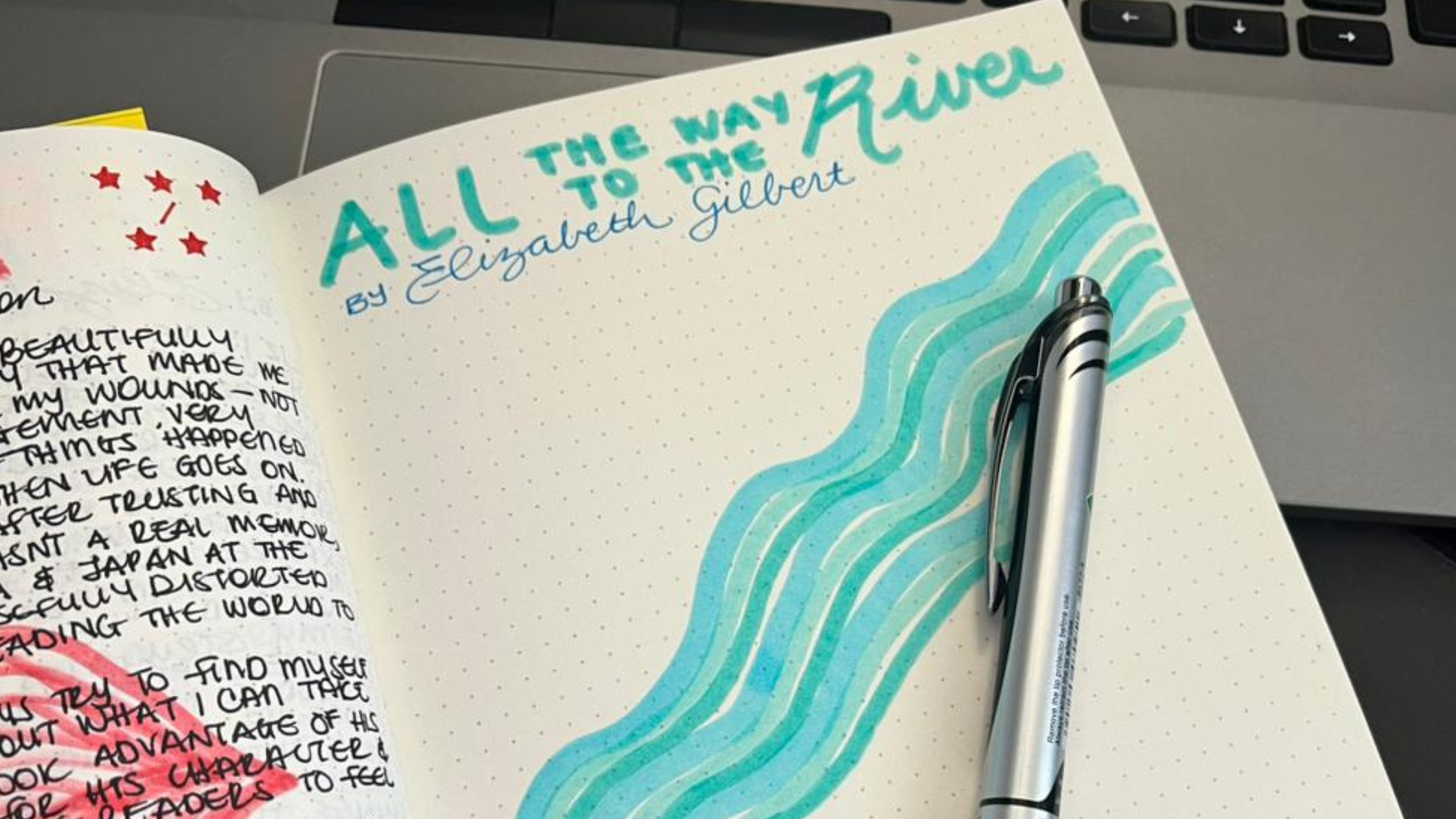

All the Way to the River — The Lessons I Carried With Me
Where do I start? This has been the rawest read I think I've ever experienced. I cringed. I flushed with secondhand embarrassment. I felt seen. I wanted to shout ME TOO, so many times. I agreed with so much. I related, maybe too much. And I cried. A lot. But I also came out the other side knowing that I have healed so much, come so far, and that it was all worth it.
The Wavelength: Why I’m Done with Half-Measures
Let's clear up something first. I don't have energy to give to people who cannot be real with themselves. If you can't self-reflect and be self-aware and do work on yourself, then we can't be friends. This does not come from a place of judgement — that's something I don't do. You do you boo. It's about me not holding space for people who are not on the same wavelength as I am, who are not willing to dig deep and be real, and who want to take energy from others without adding value.
I'll say it again for the people in the back that like to make remarks about others' faults but refuse to acknowledge their own — this is a space for ZERO judgement. Full stop.
The Mirror: Finding My Cringe in Liz’s Truth
Now let's talk about this book. Liz has always been a great influence for me because of her honesty — especially with herself. She doesn't always get it right the first time, but she's willing to look at herself to understand her role in the problem or situation. That's where I come from, too.
As a kid growing up in the chaos that was my life, I always had to take on the blame, guilt, or responsibility even when none of it was mine to carry. As I got older, I lashed out at anyone trying to place these things on me. In my “old age” (as in years of experience), I have learned that I can only carry my own, but I should only carry the truth — not a warped sense of myself or what others want me to believe of myself.
And I didn't get here by being perfect. I repeated the same mistakes many times — sometimes with no growth in between and sometimes with the minutest growth — but it was change in a positive direction, so I kept going.
This is where I especially relate with Liz. I believe her childhood to have some similarities to mine and when she speaks of her traumas, default settings, and behaviours, I often feel like I'm looking in a mirror. I do not have Liz's sex and love addiction, however, for a long time I needed external validation to feel worthy because I was never shown this as a kid. Funny enough, her addiction and my traumas seem to act out in similar ways.
Needless to say, as she's telling her story, the cringe was severe. Where she spoke so honestly about things she did — not without shame but definitely without holding back — I felt secondhand embarrassment for her. I too have fucked up. I too have behaved so pathetically for love. I too have given pieces of myself away too easily to people who hadn't earned it. (Like Rihanna also said, now I wonder if the Pisces thing matters here.)
The Evolution: Healing Beyond the Highlight Reel
Throughout the book, I read taking in how much she loved Rayya but also how much she was learning about herself. I look at every situation I find myself in and ask: what did I learn from it? What can I take away that will make me a better person? What led me to this moment and what could I have done differently?
I don't regret things because I believe this version of myself had to be here right now, but I do reflect on my choices, actions, and reactions and I always want to be and do better. Not to please others, but to no longer betray me — to live a whole life as intact as I can be, considering.
I highly recommend the read. Open-minded people will get as much from the book as I did. People who are closed off to self-reflection will feel insulted, I reckon, and disgusted even at Liz's honesty. And that should tell you something.
The Collapse: When Resilience Isn't Enough
The most significant part of the book for me is the last section where she speaks about healing the inner child. I couldn't stop crying right through to the end of the book. Not because I was triggered, but because my inner child and I embraced each other, celebrating how far we've come with the knowing of what she described and experienced because we had too.
I am trying to be open about my journey of self-acceptance, without giving too much away. Not because I would rather not share my story, but because I still want to write my memoir and that's where I want the rawness to live. In my posts, I touch on the topics to ease us into the journey through levels — first recognition, reflection, and then sitting with it a bit deeper and doing some of the work. I share where I feel it serves the story. But I do share honestly.
The past few years have been challenging for me — I've mentioned before that menopause and the drop of estrogen triggers AuDHD, but also it can lead to depression and other imbalances in women. For the first time in my entire life, despite all the traumas of my past, I found that I couldn't regulate myself back to the “nothing can get me down“ resilience that I've built over a lifetime. It was almost like the change in my body was saying: you can't keep doing this anymore. We need to let go of some of this weight. And we're gonna start on the inside.
The Lighthouse: I’ve Got You Now
One of the most significant traumas I had to unpack was connected to so many of my default settings and behaviours — especially my reactions. My inner child never felt safe. I kept searching for someone to show up for her—certainly in the wrong people, but also in people that hadn't earned that space. And then there was one person in particular that I was demanding this from when it should never have been his to bear.
I finally turned to my inner child and asked her what she needed. I sat with all the wounds and one by one addressed them. I stepped up and said: I SEE YOU, I'VE GOT YOU, I LOVE YOU. I promised to never turn my back on her again. I am the person she always needed, and we're no longer looking outside of us for this.
This healing of the child directly translates into not being willing to betray myself — for another person, for a job, for anything — and cements my values into how I make choices or take action.
I didn't need to read All the Way to the River to learn this, but I needed to read such a real story filled with emotion and authenticity to remind me that anytime someone isn't able to handle me, it's got nothing to do with me. This is me. I'm the most real person (after Liz, of course) that you're ever gonna meet.
Maybe I'm ahead of my time and not always surrounded by people that "get" me, but that doesn't mean that I'm not exactly where I'm supposed to be. And maybe one day someone will read my stories and recognise themselves and understand the problem was never them — and that they're doing a fucking amazing job, and they're exactly where they're supposed to be too.

NOT YOUR AVERAGE BOOK REVIEW
I’m not here to critique structure, plot, or literary style.
These reflections are about how I connected with the book;
what it surfaced in my life and healing;
and the lessons, echoes, and reminders I carried forward.